

null

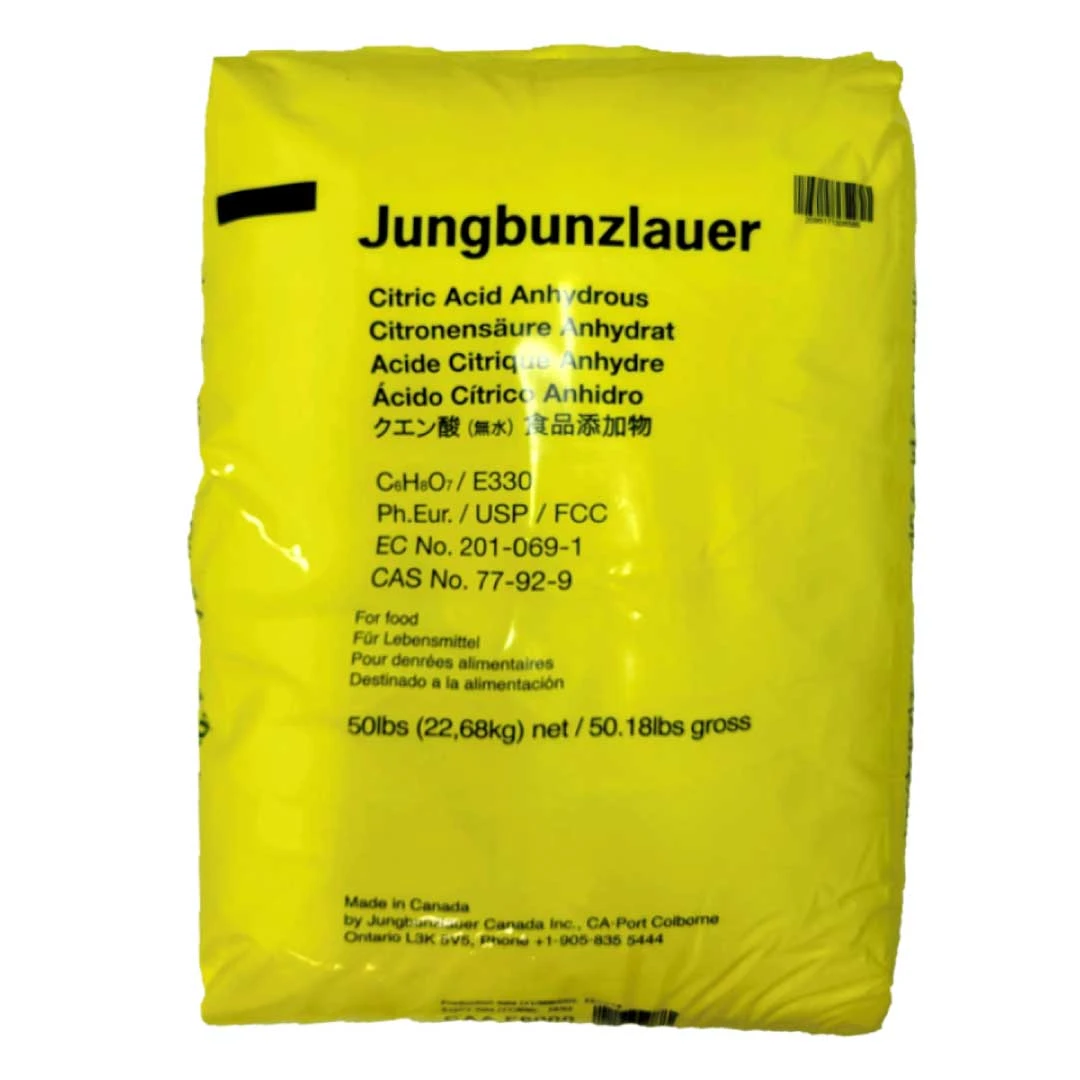
Citric Acid Anhydrous FCC,USP,E-330 | 50 lb Bag

Jungbunzlauer

Bulk Pricing

Below are the available bulk discount rates for each individual item when you purchase a certain amount

  • Buy 4 - 10 and pay only $140.65 each
  • Buy 11 - 49 and pay only $130.95 each
  • Buy 50 or above and pay only $108.75 each
Request a quote for multiple pallet quantities

To receive a bulk discount, enter the amount in the “Quantity” field and the price will automatically reflect these prices.
Bulk Pricing

Below are the available bulk discount rates for each individual item when you purchase a certain amount

  • Buy 4 - 10 and pay only $140.65 each
  • Buy 11 - 49 and pay only $130.95 each
  • Buy 50 or above and pay only $108.75 each
Request a quote for multiple pallet quantities

To receive a bulk discount, enter the amount in the “Quantity” field and the price will automatically reflect these prices.

$144.45
(10 reviews) Write a Review
SKU:
11067-02-FBAGA
Weight:
50.00 LBS
Adding to cart… The item has been added

Bulk Citric Acid Anhydrous for Food, Beverage, Personal Care, and Cleaning Formulations

Citric Acid Anhydrous is manufactured and packaged by Jungbunzlauer in a bulk 50-pound (22.7 kilogram) bag meeting USP and FCC standards. Citric acid anhydrous is a highly soluble organic acid used for acidification, pH control, flavor adjustment, sequestration, and other functional purposes across food, beverage, personal care, and cleaning formulations.

In food and beverage products, citric acid provides a strong acidic taste that can be used to add tartness and balance flavor while adjusting formulation pH. It can also bind certain metal ions, helping limit reactions that contribute to unwanted flavors, odors, color changes, and product instability.

Common Applications

Citric Acid Anhydrous is commonly used for:

  • Acidification and pH control in beverages
  • Wine, beer, and other alcoholic beverage formulations
  • Tartness and flavor adjustment
  • Bakery dry blends and leavening systems
  • Sequestration of metal ions in food and beverage formulations
  • Preservation and pH management in processed foods
  • Meat-processing carcass wash formulations
  • Personal care formulations and pH adjustment
  • Exfoliating personal care products
  • Flavor and fragrance formulations
  • Industrial and equipment cleaning formulations

Product Specifications

  • Manufacturer: Jungbunzlauer
  • Package size: 50-lb bag
  • Quality standards: FCC and USP
  • EU designation: E330
  • Particle size: Fine granular, 30 to 100 mesh
  • Assay: 99.5% to 100.5%
  • Appearance: Colorless crystals or white crystalline powder
  • Taste: Strongly acidic
  • Odor: Practically odorless
  • Chemical formula: C6H8O7
  • CAS number: 77-92-9
  • pH: Approximately 1.8 in a 5% solution
  • Solubility: Very soluble in water

Frequently Asked Questions

What is Citric Acid Anhydrous used for?

Citric Acid Anhydrous is commonly used to increase acidity, regulate pH, add tartness, modify flavor, and bind metal ions in commercial formulations. Its applications include bakery products, beverages, wine and beer, processed foods, personal care products, flavors and fragrances, and cleaning formulations.

Why is anhydrous citric acid useful in dry formulations?

Citric Acid Anhydrous’ dry crystalline form makes it useful in applications such as powdered beverage mixes, bakery formulations, dry ingredient systems, and other products where a dry acid source is preferred.

Can citric acid be used as a preservative?

Citric acid can support food preservation through acidification and other technical functions. Citric acid has antimicrobial and antioxidant functions in food in addition to its role as a pH-control agent.

How does citric acid work as a sequestrant?

Citric acid can bind or chelate metal ions within a formulation. This can help limit metal-driven reactions that may contribute to unwanted flavor, odor, color, or stability changes in certain products.

What does E330 mean?

E330 is the European food additive designation for citric acid.

  • 5
    Bath and Body

    Posted by David on Jul 31st 2023

    Bath Bombs and to alter the PH of some body products

Is Vitamin C Important in Our Diet?
Green Cleaning With Citric Acid
Is Citric Acid A Preservative? | What You Need to Know
What Makes Wine Acidic?
Bread Fun Facts: How to Tell if it’s Fresh
Why is Beef Jerky So Popular?
Commercial and Home Canning Food Preservation Ingredients
What is Citric Acid and How is it Used?
What are Alpha-Hydroxy Acids? Using AHAs in Cosmetics
How to Make Your Own Bath Bombs (Easy DIY Recipe)
What are Food Preservatives?

Browse Related Products